
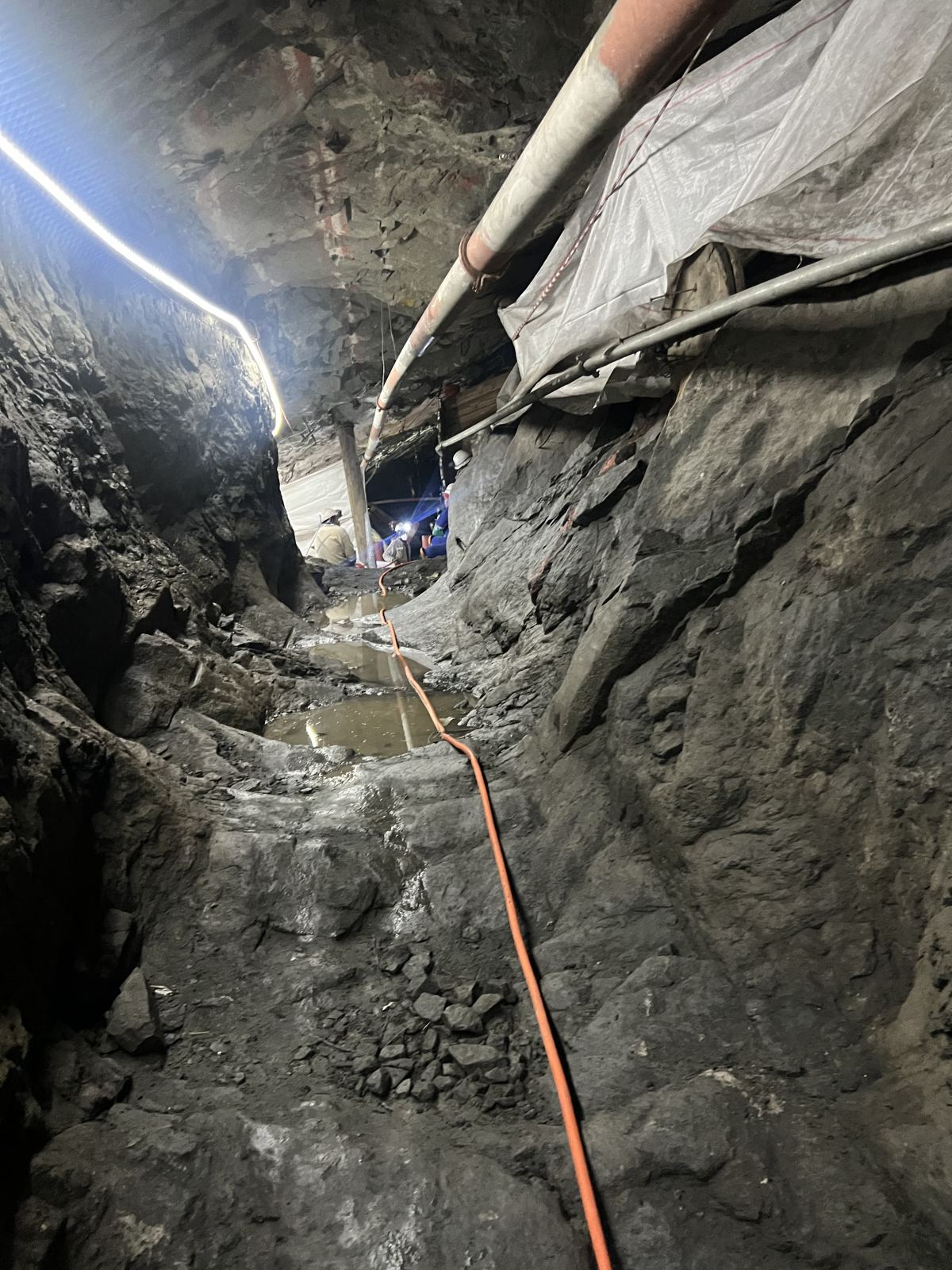
Compressed air · A PGM mine, Limpopo
Compressor scheduling and a compressed-air wastage roadmap
Compressors were running to a fixed pattern, not to demand. We showed what matching supply to the mining cycle would save, and what to fix first.
R7M to R10M
a year, opportunity identified
How to read this figure
Modelled figure. It is what our analysis predicts, not a measured saving.
2024 to 2025
The problem
What was going wrong.
Compressed air was the mine's most expensive utility, and much of it was being produced when nobody was drilling. Pressure at the face was still too low during the drilling shift.
What we did
- Profiled compressed-air demand across the 24-hour mining cycle.
- Modelled compressor schedules against that demand.
- Sized the supply lines, comparing steel and HDPE pipe, to recover pressure at the face.
- Ranked the fixes by cost and return into a step-by-step plan.
The result
What the client got.
The mine received a prioritised plan with the cost and expected return of each step.
What we found
- Compressor scheduling alone was modelled at R7M to R10M a year.
- A first package of fixes costing about R1.35M was estimated to return R7.5M to R9.5M a year.
- The package: compressor scheduling, crosscut isolation valves, water level-control valves and half-level flow meters.
More work
Other case studies.
Technology comparison
R45M
modelled cost difference between the two drilling options over two years
Pneumatic or electro-hydraulic rock drills?
A PGM mine, Limpopo
Read the case studyDigitisation
3 utilities
measured live on one crosscut: air, water and power
Putting a live dashboard on a working crosscut
A PGM mine, Limpopo, with an equipment manufacturer
Read the case studyService water
99%
average accuracy of the model against the real system
A digital twin of a deep-level service-water system
A deep-level gold mine, Gauteng
Read the case study
Let's find what your mine is losing.
Tell us about the site. We will come and look, and tell you plainly what we think it is worth fixing.