Hardware · In development
Measure the unseen.
Devices we are developing for the places where nothing off the shelf survives. Each one is labelled with how far along it is.
Where each device stands
We say how far along each one is.
Some of these are on site, some are working prototypes and some are still designs. Each carries a label, so you know what you would be piloting.
- Site trial
- Built and installed or tested on a real site.
- Prototype
- A working unit exists and has been tested.
- In design
- Designed in detail; not yet built.
- Concept
- Defined and costed; looking for a pilot partner.
In-stope data sensor
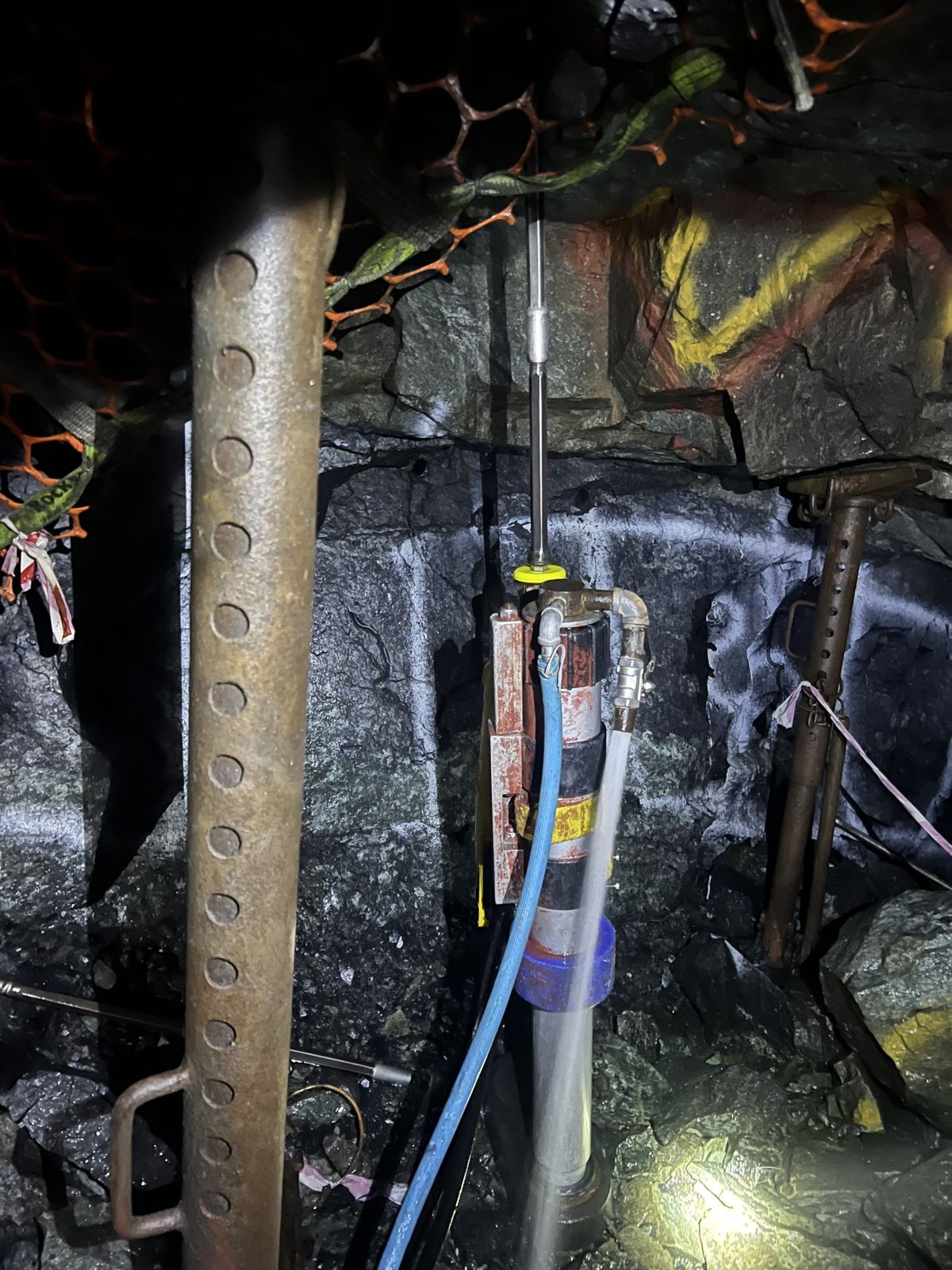
A portable logger that shows what pressure and heat are really like at the face.
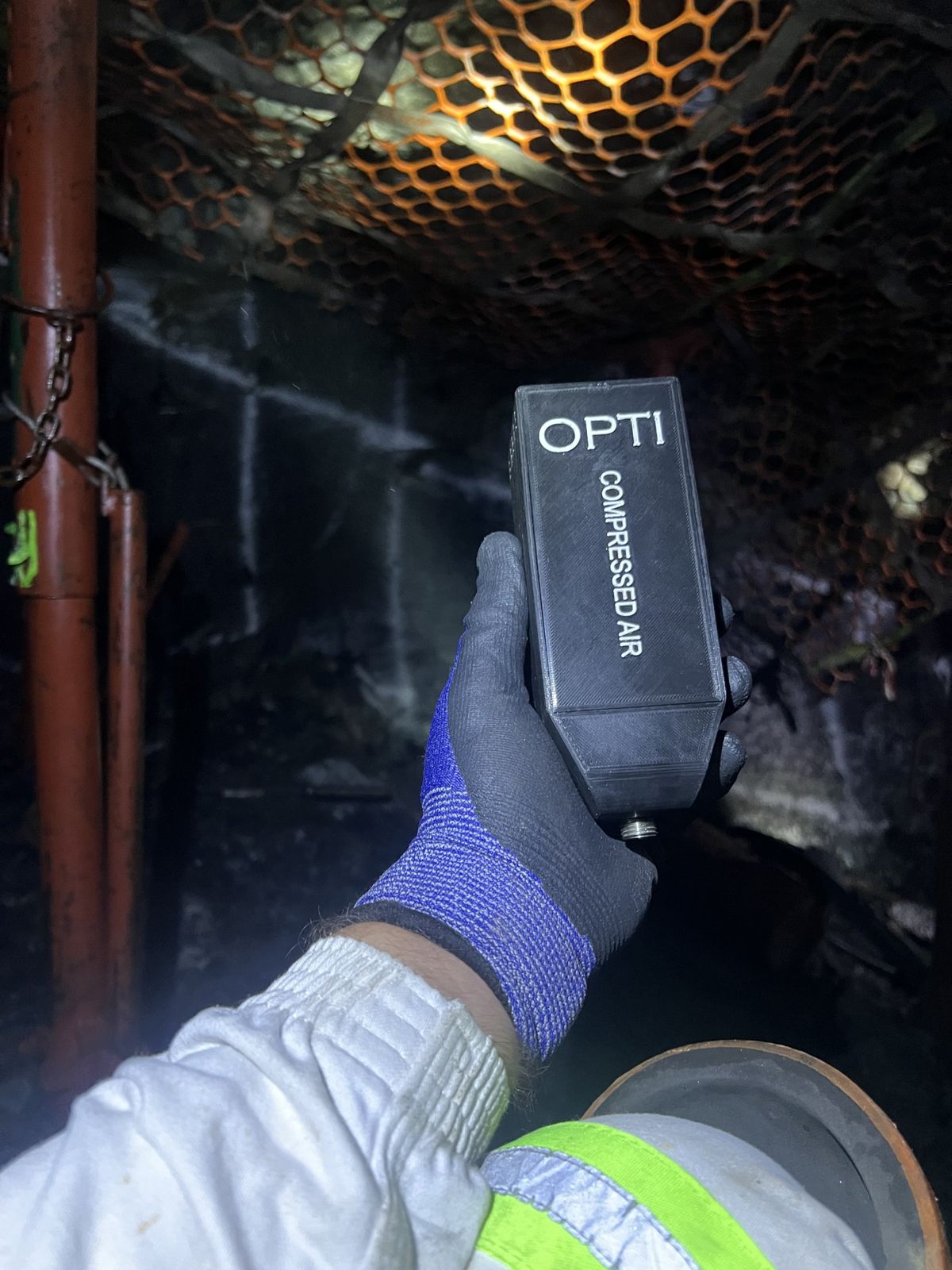
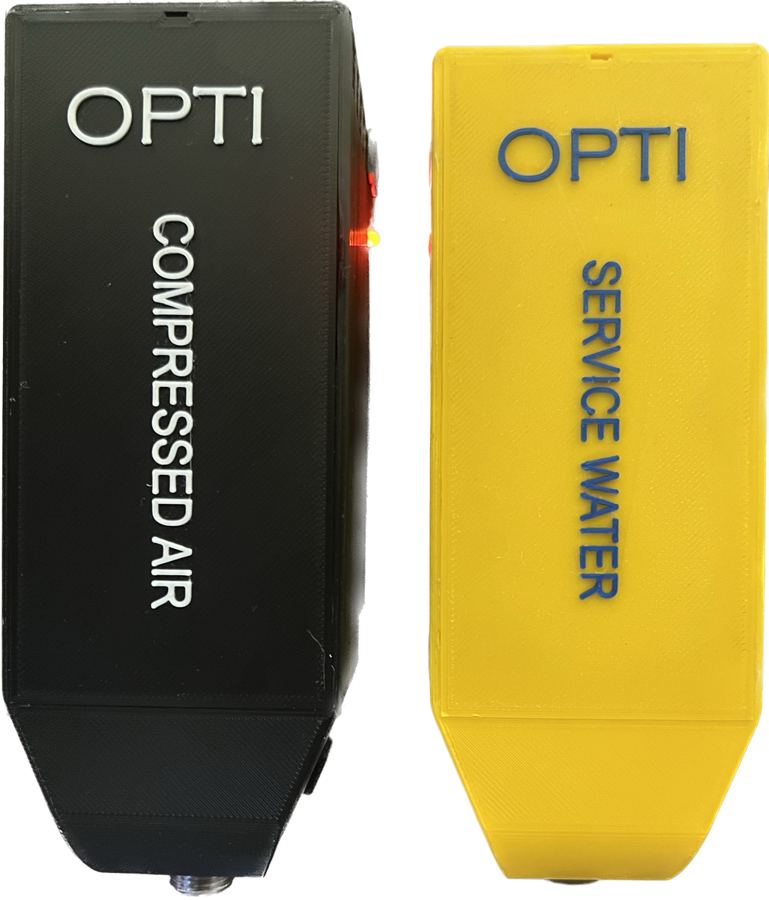
Most mines have no network at the stope face, so nobody knows the air pressure or temperature where the work actually happens. A miner plugs this sensor into the compressed-air or water manifold for the shift. At the end of the shift it uploads, and the readings become a heat map of the mine.
- Measures pressure, dry-bulb and wet-bulb temperature and humidity
- Battery lasts the shift; charges wirelessly on a rack in the lamp room
- Stores data on board; no underground network needed
- Separate versions for compressed air and service water
Where it stands
Working prototypes have been taken underground and logged real conditions.
A shift, seen through 26 sensors
Drag to rotate · tap a sensor
06:00
Day shift · Crews travelling in
Loading the mine layout…
Across the mine · 06:00
Loading…
Sensor
Dots are sensors. The colour between them is an estimate, and it fades where no sensor is near.
Interactive example. The readings are illustrative, shown on an anonymised mine layout.
Automatic drain valve
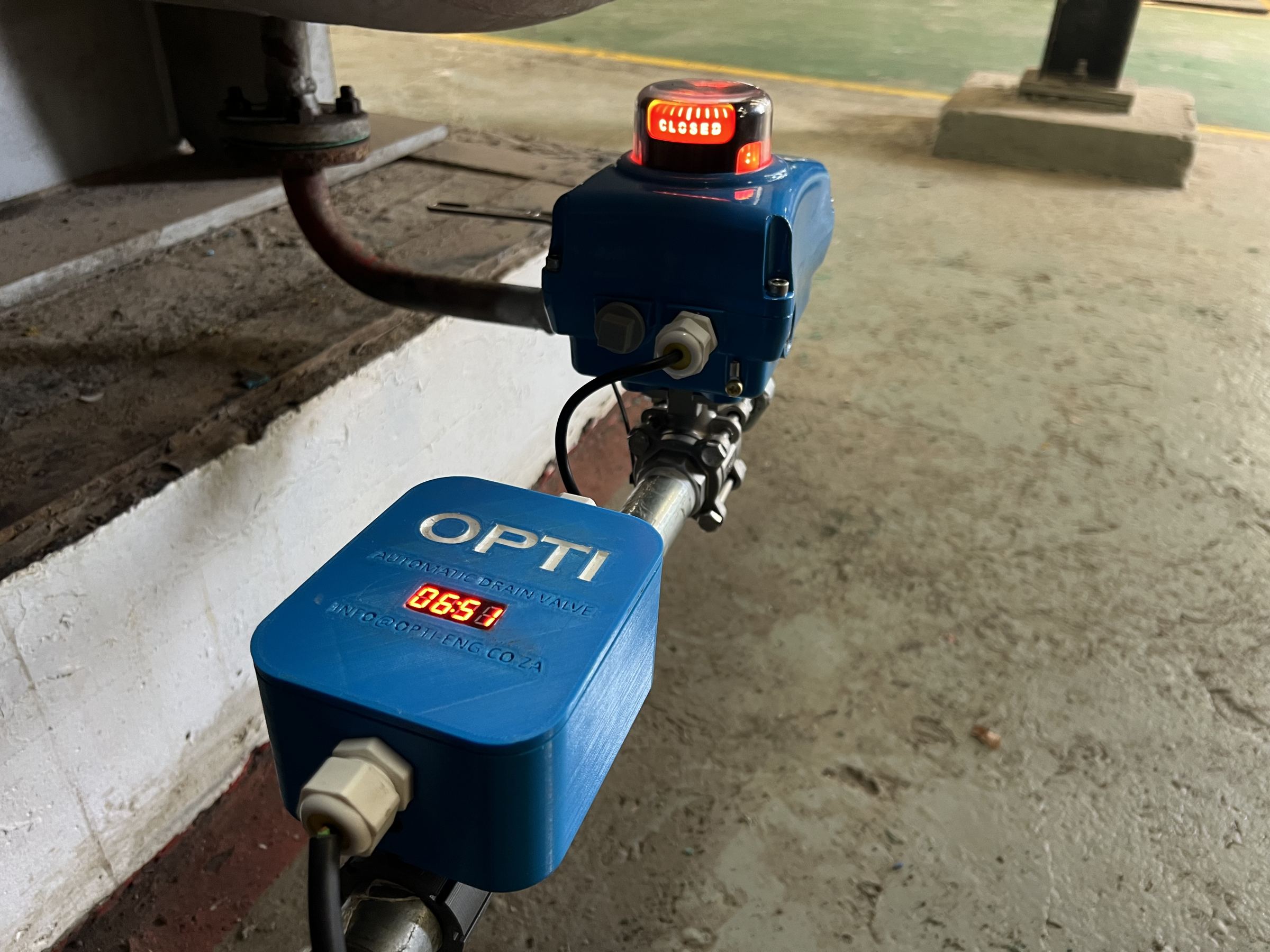
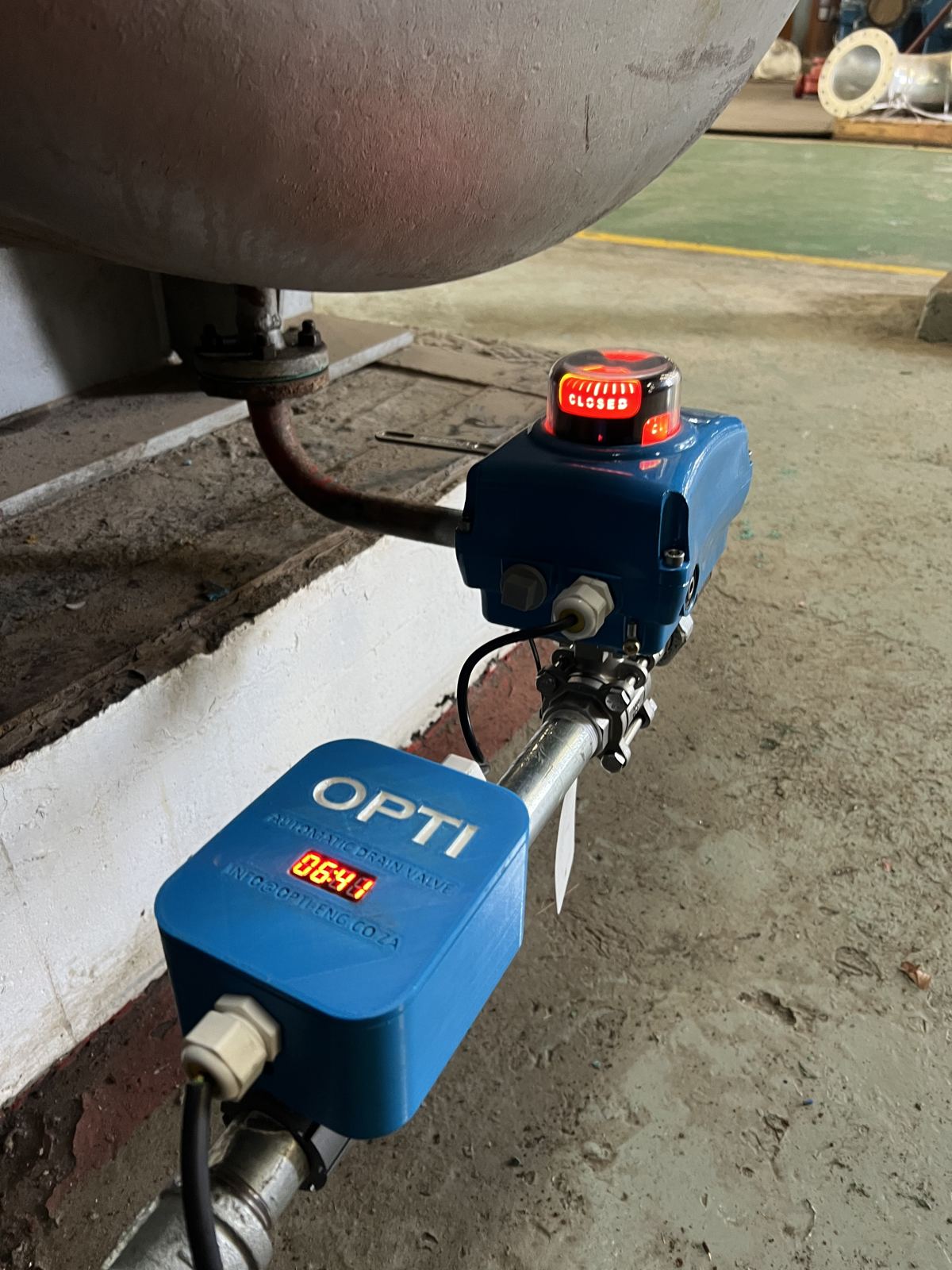
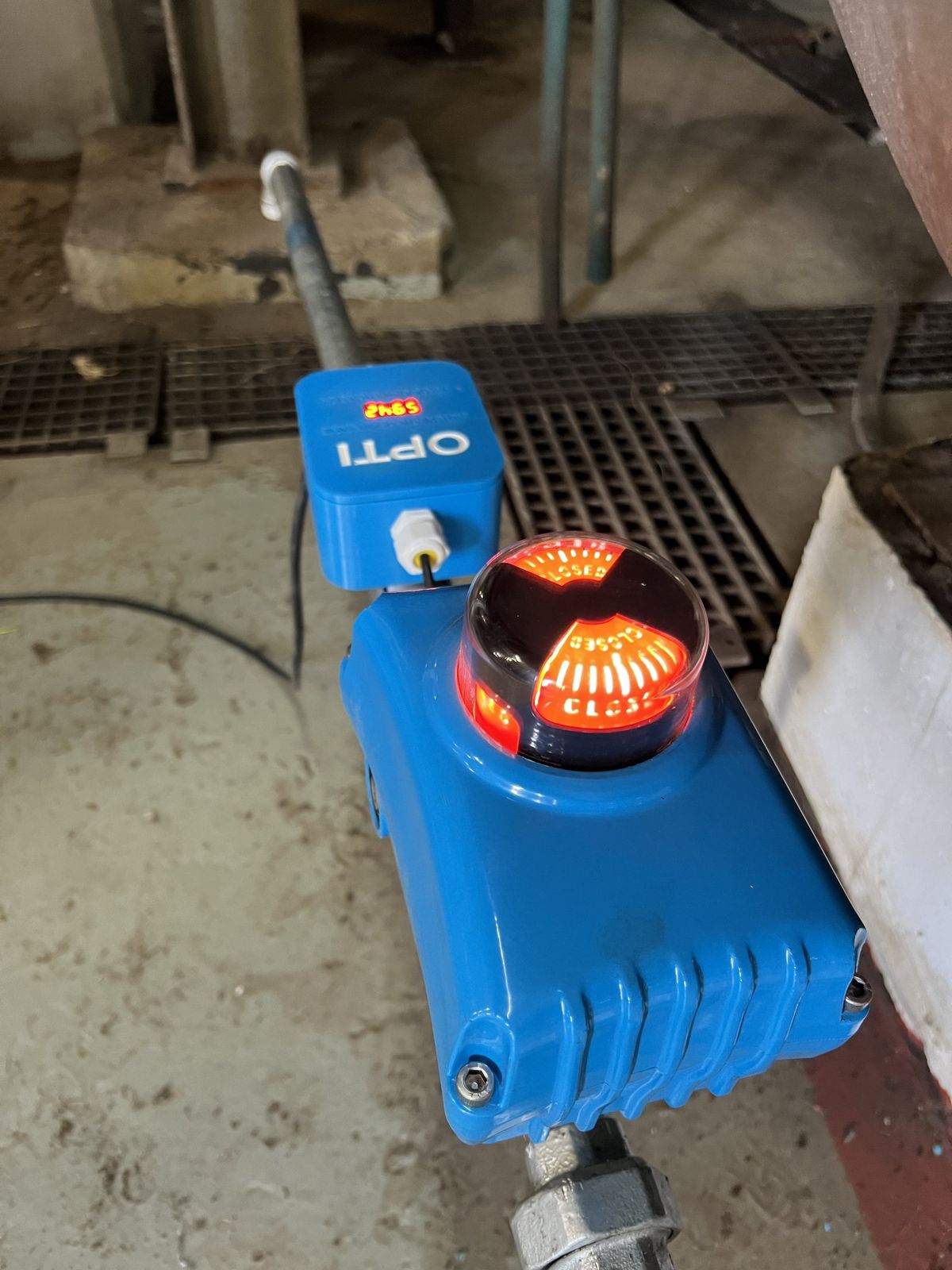
Drains water out of compressed-air lines by itself, so it does not reach the rock drills.
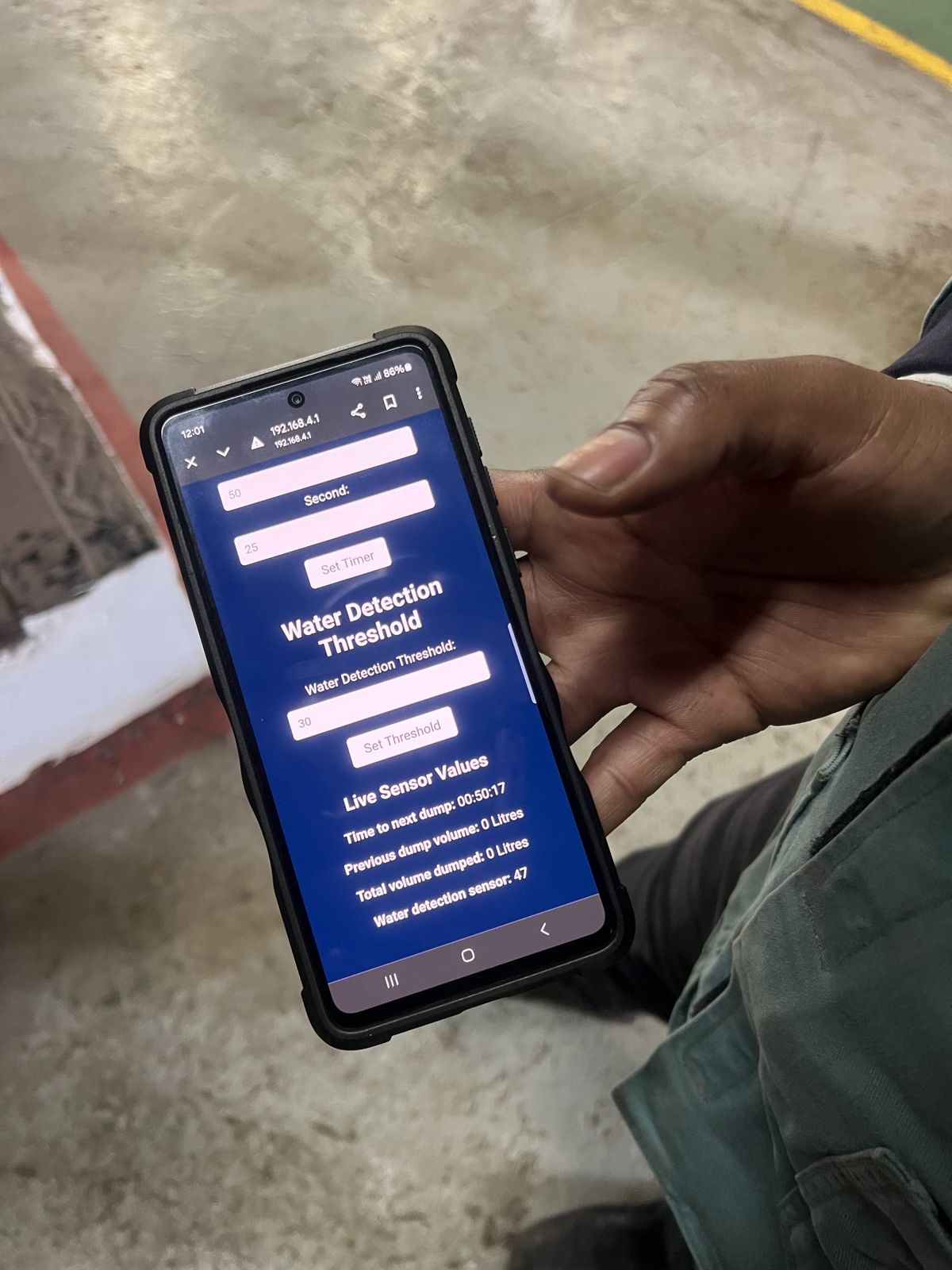
Water in compressed-air lines damages rock drills and chokes the pipes. Manual drain valves are either left open, which wastes air, or never opened. This controller senses the water and opens the valve only when it needs to.
- Senses water and drains automatically
- Counts and logs every drain cycle
- Settings and live readings on a phone
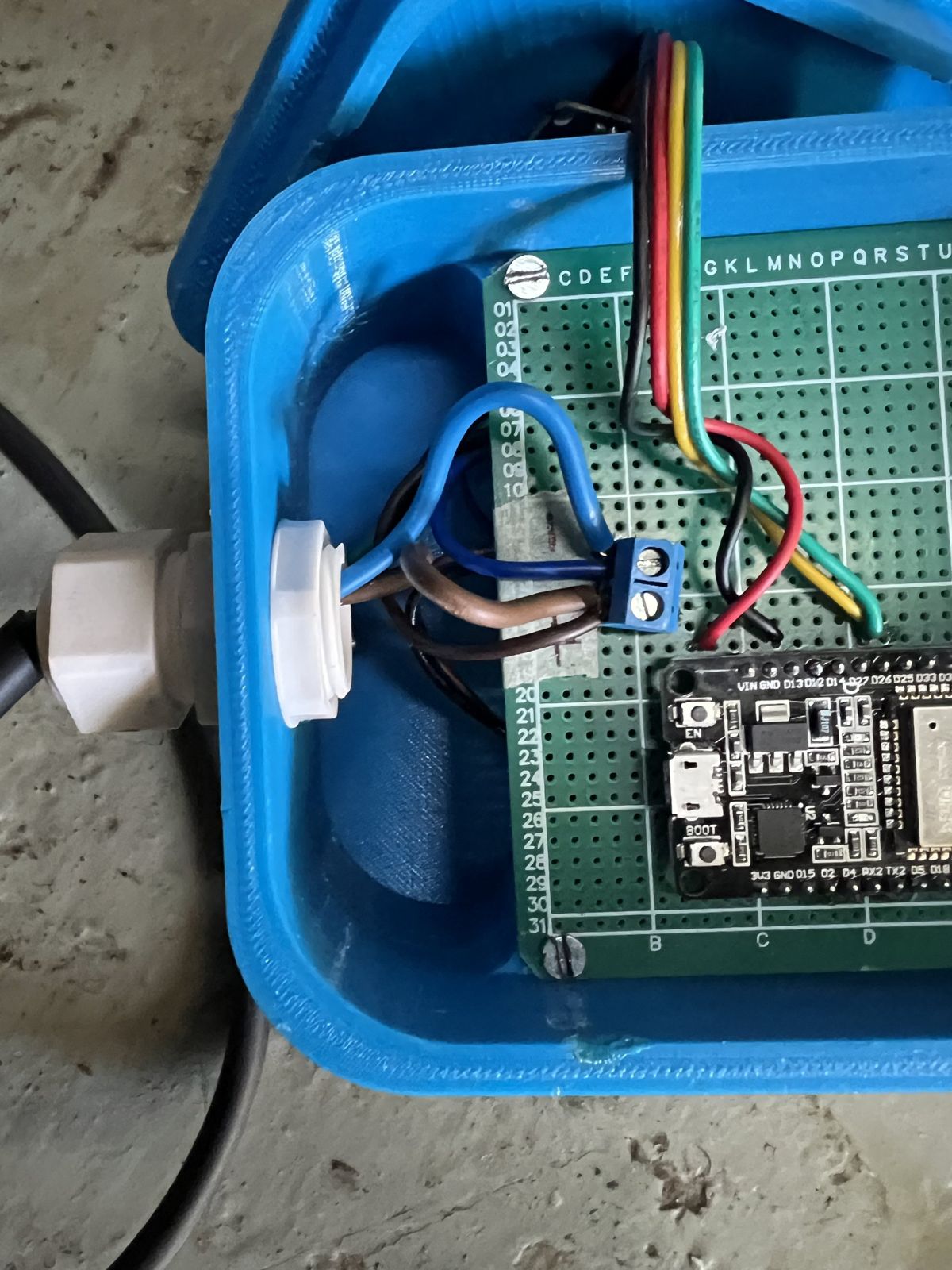
- Controller designed and built in-house
Where it stands
Installed on an air receiver at a compressor house for site testing.
Scraper winch safety
Detects a person in the scraper path and keeps the winch stopped until the path is clear.
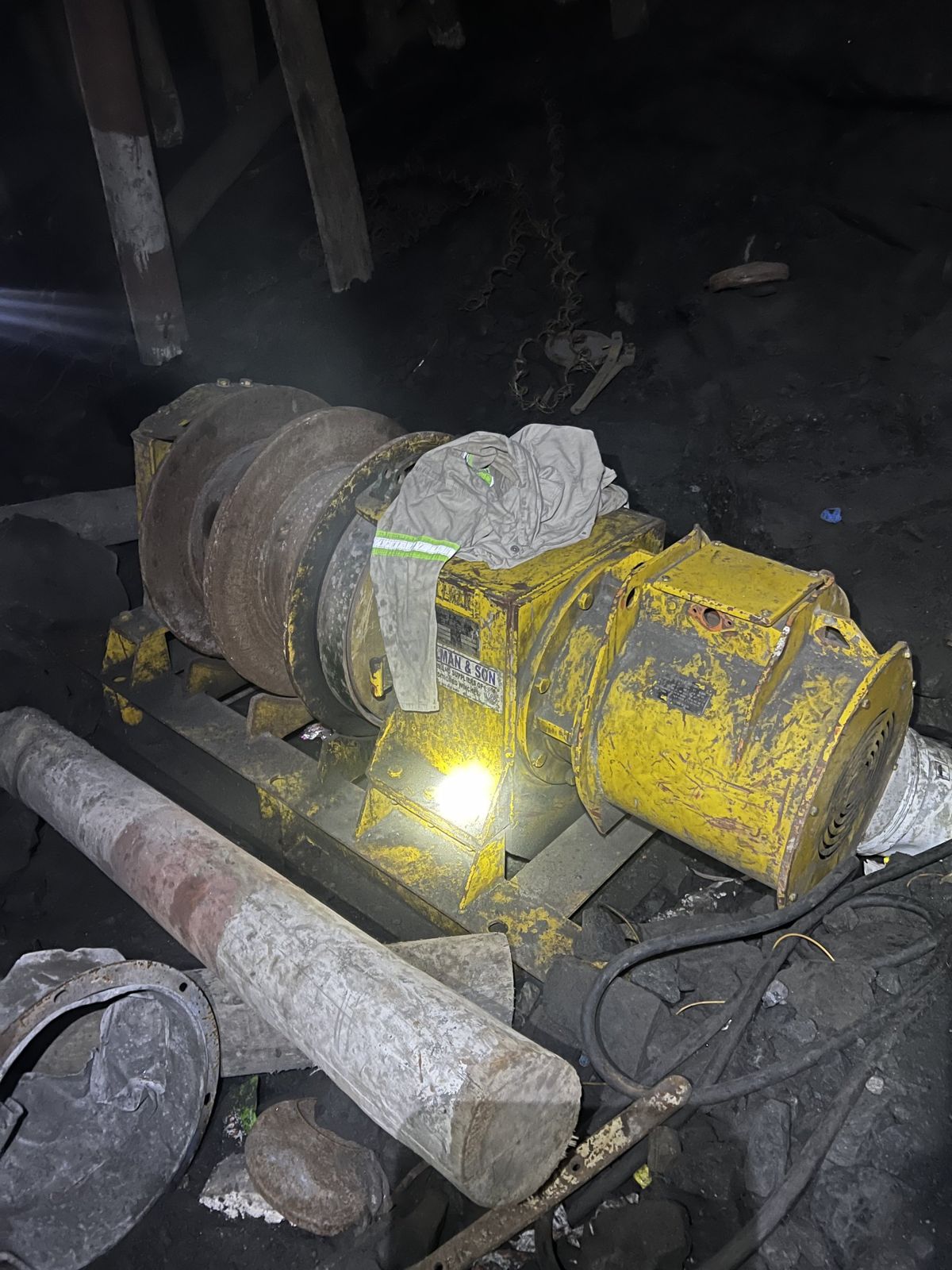
Scraper winch incidents are a leading cause of fatalities in conventional mining, and tag-based systems miss anyone without a working tag. We are developing radar-based detection that sees the person, tag or no tag, and interlocks the winch.
- Radar detection that does not depend on tags
- Camera as a second layer
- Interlocks the winch until the path is clear
- Remote-operated winch retrofit, designed with a winch manufacturer
Where it stands
Radar detection has been tested underground in a working stope with a PGM producer. The remote-operation retrofit is designed in detail.
In-stope lighting
Modular LED lighting for stopes and gullies that also shows whether the winch is running.
Stopes and scraper gullies are poorly lit, and people cannot always tell when a winch is about to move. This retractable LED strip takes its power from the winch starter box and lights the working area in white. As an add-on, a coloured pulse runs along the strip to show the winch's status: green while it is off, red while it runs.
- 10 m LED strip modules on self-retracting reels, linked one to the next for up to 30 m
- Powered from the winch starter box
- White area lighting, with an adjustable flood light on each reel
- Add-on winch status: a pulse along the strip, green when the winch is off and red when it runs
- Sealed for wet, dusty conditions
Where it stands
Concept stage. Looking for a pilot site.
01/08How it goes together: housing, self-retracting spool, coiled LED strip, cover.
How the light strip works
Switch the lights · start the winch
Lights on. Winch off: the pulse along the strip is green.
- White light for the working area, always on
- A reel at the start of each 10 m strip
- Green pulse: winch off
- Red pulse: winch running
Interactive example of the concept, drawn as a plan view of a scraper gully. The winch-status pulse is a planned add-on; it is not installed on a site yet.
AI winch module
Warns you before a winch motor burns out, and records how hard each winch is working.
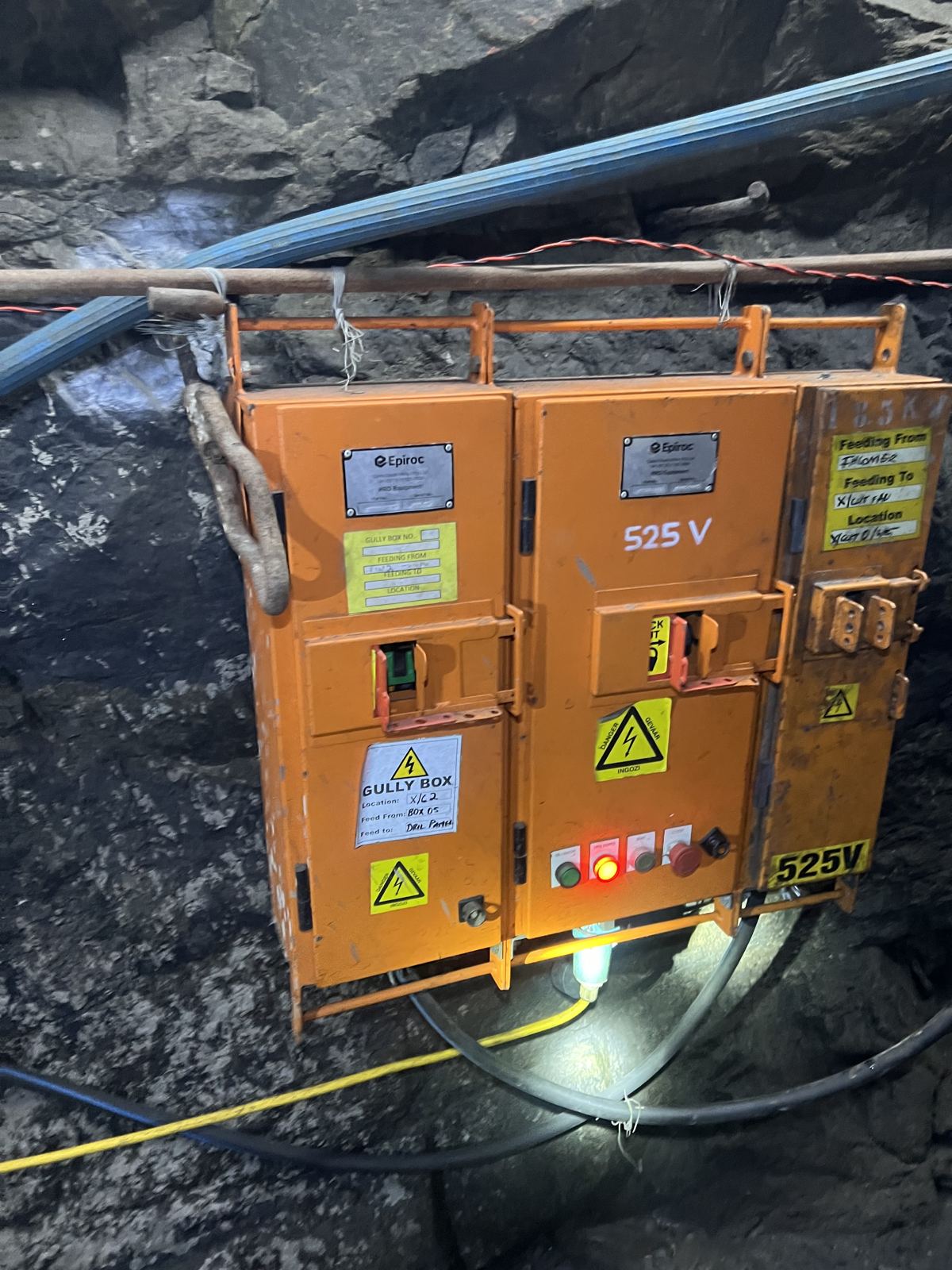
A burnt-out winch motor can stop ore flow for days. This module sits in the starter box, watches the motor's voltage and current, and warns of insulation failure before it happens. It also logs running hours and utilisation.
- Predicts insulation failure from voltage and current
- 98% prediction accuracy in laboratory trials on test motors
- Logs start and stop times and utilisation
- Can drive the in-stope lighting
Where it stands
The prediction method is proven in the laboratory. The module itself has not been built yet.
How an early warning plays out
Drag the slider
HealthyHealth 89/100
The motor is behaving normally. Nothing to do.
Interactive example with illustrative data. It does not show a client site.
Level-crossing train detection
Radar at a rail and road crossing that sees the train coming and triggers the warnings.
At mine level crossings, warnings often depend on the driver or on track circuits that fail. Radar on both sides of the crossing detects an approaching train, estimates when it will arrive, and triggers the lights and boom.
- Radar on both approaches
- Estimates the train's arrival time
- Triggers warning lights and boom barrier
- No equipment needed on the locomotive
Where it stands
Proposed for a site trial.
How we build
Built in-house
We design the electronics, the enclosure and the software ourselves, so a device can go from an idea to a unit on site quickly, and can be changed when the site teaches us something.
- Electronics and circuit board design
- CAD design and 3D-printed prototypes
- Embedded software and phone apps
- Portable metering for audits: flow, pressure and power
Want one of these on your site?
We are looking for pilot sites for each device. Tell us which problem matters most to you.