
Compressed air · A PGM mine, Limpopo
Keeping water out of the compressed air
Water in the air lines was damaging rock drills. Our site study of the water traps showed why the existing drains did not work, and led us to design our own.
1 new product
the study led to our automatic drain valve
How to read this figure
This was a study and design project. No saving is claimed.
2023
The problem
What was going wrong.
Water traps on the compressed-air lines relied on manual drain valves. They were either left open, wasting air, or never opened, so water carried through to the drills.
What we did
- Audited the water traps and drains underground.
- Compared the existing automatic drain with a float-switch and solenoid design of our own.
- Set out a trial plan with dew-point baselines and measuring points.
The result
What the client got.
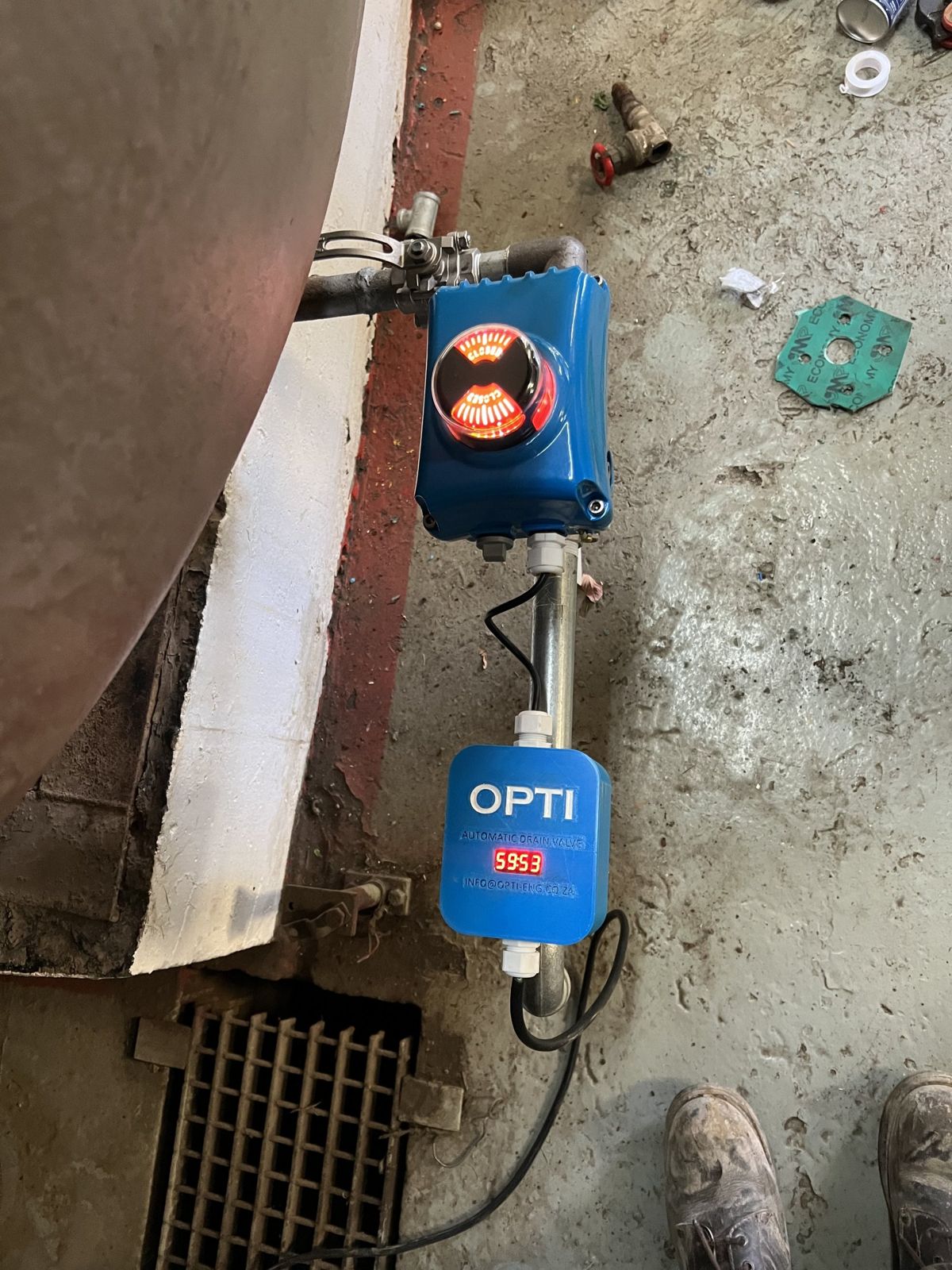
We designed and built an automatic drain valve, which has since been installed on an air receiver for site testing.
What we found
- The existing drains could not be relied on in mine conditions.
- A simple sensed, automatic drain would stop the water without wasting air.
More work
Other case studies.
Technology comparison
R45M
modelled cost difference between the two drilling options over two years
Pneumatic or electro-hydraulic rock drills?
A PGM mine, Limpopo
Read the case studyCompressed air
R7M to R10M
a year, opportunity identified
Compressor scheduling and a compressed-air wastage roadmap
A PGM mine, Limpopo
Read the case studyDigitisation
3 utilities
measured live on one crosscut: air, water and power
Putting a live dashboard on a working crosscut
A PGM mine, Limpopo, with an equipment manufacturer
Read the case study
Let's find what your mine is losing.
Tell us about the site. We will come and look, and tell you plainly what we think it is worth fixing.